

Public transport in Buenos Aires: a guide to the best ways to get around the city.
Buenos Aires (BA) is a very large city, in addition to being the capital of the country. It has many activities to do and countless neighborhoods to visit.
Here, we want to tell you about the different ways to get around BA. We will explain the main means of transport and what you need to know to use them.
Public Transport in Buenos Aires
The first thing you need to do is buy the SUBE card. However, the subway can now be paid for with debit cards, credit cards and virtual wallets.
You will need this contactless card to pay for public transport in BA. Without it, you will not be able to pay for the bus (colectivo), so getting the card is vital.
The card works with credit, so you need to load it before traveling. You can also travel with a negative balance and top up the card later. However, the allowed amount changes whenever fares go up, so we recommend not relying on it too much.
Where to Buy the SUBE Card
You can buy the SUBE card almost anywhere: subway stations, kiosks, markets and post offices. If a store has this sign on the door, you can buy or top up a card there.
 Getting the card is easy. Even so, to be safe, we recommend checking the points of sale on the official SUBE website.
- Where it says “Province”, choose Capital Federal (not Buenos Aires).
- Where it says “locality / neighborhood”, enter the district where you are (e.g., Palermo).
- Then, choose the point of sale closest to your location.
Is the SUBE Card Personal?
Good news! No, it is not personal, so it can be used by more than one person. This means you can pay for more than one trip with the same card. What’s more, before leaving the city, you can give the card to another tourist or keep it for a friend or relative.
Do not forget to top up the card. We recommend loading enough money for your entire trip. Now, with the card in hand, it’s time to take a ride.
If you lose your card and only need to make one trip, you can ask a passenger to buy your ticket in exchange for cash. However, it is advisable to get a new card.
Buenos Aires Subway
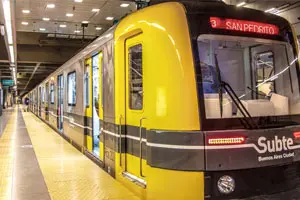 The subway (known locally as the Subte) is the best way to get around BA. It is easier than taking a bus and is the fastest way to travel in the congested city center. Currently, you can pay for it with credit cards, debit cards and virtual wallets.
The subway reaches any tourist spot in Buenos Aires, except La Boca.
How the Subway Network Works
The BA subway network is small compared to the size of the city, but it is easy to understand. There are 6 different lines identified with letters and colors.
Lines A, B, D and E can be seen as branches of a tree. From the center of the city, they spread out toward other neighborhoods of BA, from east to west.
Lines C and H cross the other lines from north to south. Thanks to them, you can make connections with the rest of the network.
Below, you can see the map of the subway network (click to enlarge).
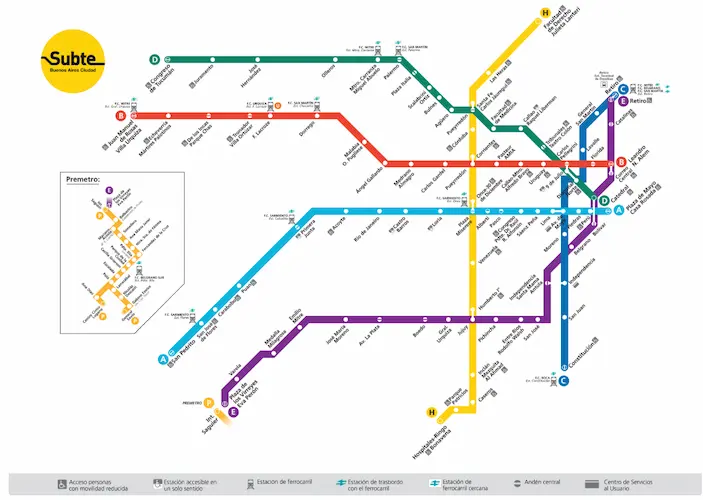
Every subway station has its own name, even those where lines connect and share a location. For this reason, pay special attention when changing lines, because the same platform can have different names depending on the line.
For example, if you are on line H and want to switch to line A, you need to get off at the “Once” station. On the other hand, if you are on line A and want to switch to line H, you need to get off at the “Plaza Miserere” station. As you can see on the map, both stations are in the same place, but they have different names depending on the line.
Schedules and Peak Hours
Subway frequencies and schedules can vary. For that reason, here is the website of the Buenos Aires City subway, so you can keep up to date.
In normal situations, the subway works well. However, delays may occur, and during peak hours the cars get packed. If possible, avoid the subway from Monday to Friday, from 7am to 10am toward the center and from 6pm to 8pm from the center.
Buses in Buenos Aires
Buses (colectivos) are big and comfortable in BA. Unfortunately, taking one is much more complicated, because you need to find the correct bus stop and know where to get off. The latter is very important, since you could get off in the wrong place, far from your destination.
How to Find Your Bus Route
As a tourist, you may never need to take a bus, since the subway is more convenient. Even so, here are some recommendations just in case:
- Check which bus line reaches your destination using the City’s route planner.
- Press the button with the bus icon. Fill in line A with the departure address and line B with the destination address. Make sure the addresses are spelled correctly, as the map covers all areas of the city. If you have doubts, you can compare the route on Google Maps, which does the same thing.
- Press “Show options” and you will find several transport alternatives. If the subway is the best one, you can skip the next steps. Otherwise, continue with the next step.
- Check which is the fastest and closest bus. Click on the dot next to it to display the bus route on the map.
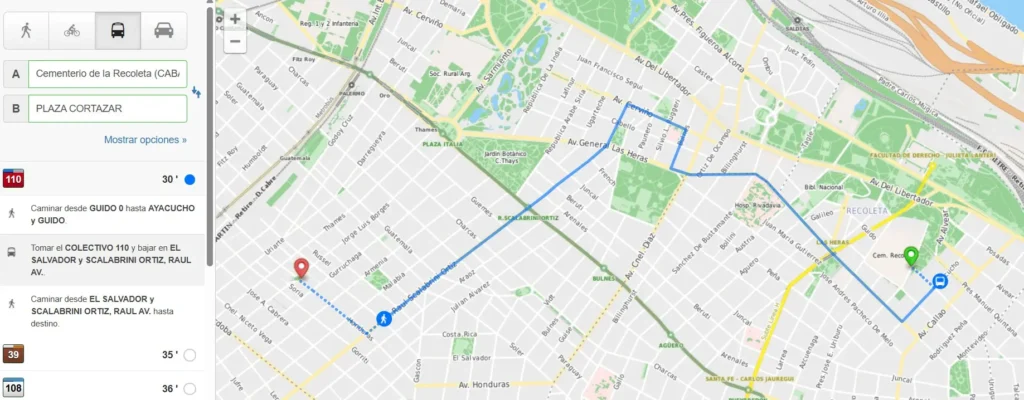
In this image, you will see the route from La Recoleta Cemetery to Plaza Serrano in Palermo. From the green dot, you have to walk to the bus stop, take the 110 and get off where the blue dot appears. Finally, you have to walk to the red dot.
Waiting at the Bus Stop
Once you know your route, it is time to wait at the correct stop. There you will see the number of the bus line you need. Bus stop signs usually look like this:
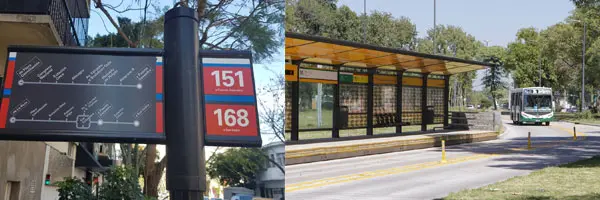
To make the bus stop, you need to hail it by raising your hand. Otherwise, it will not stop. If there are other people at the stop, line up and respect the order of arrival. Respect that order when boarding, too, or you will upset the locals. Also, board through the front door: the back and middle doors are for getting off only.
Paying and Getting Off
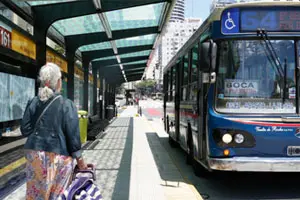 Once on the bus, you will have to tell the driver where you will get off so that the price shows on the SUBE reader. When the amount appears, place the card on the reader and wait for the green light. That’s it! Now enjoy the ride.
Do not get distracted. Watch the street signs and your map to know where to get off. We recommend asking the driver or a passenger to tell you when to get off. You can also keep the map active with your location to see how far you are from your stop. In any case, locals are usually friendly and willing to help tourists, so you can count on that extra help.
Taxis in Buenos Aires
Taxis are quite safe in Buenos Aires. Do not hesitate to take them, as it is like anywhere in the world. Pay attention to the following:
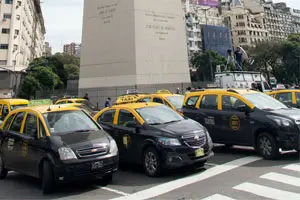 Drivers who want to set a fixed price for the trip. Unlike taxis in other South American countries, taxis in Argentina use a meter that shows the price to the passenger. At the end of the trip, the meter shows the total. It is not common to tip taxi drivers.
- Drivers who take tourists the long way to make the trip more expensive. This is almost impossible to rule out, because we do not know the city, and it can happen anywhere in the world. One way to avoid it is to check the route on Google Maps on your phone. In any case, taxis are inexpensive compared to those in other countries in the northern hemisphere.
- Drivers who try to confuse you by claiming you did not hand over the right amount. Check carefully and count your money as you hand it over.
We do not want to scare you: this is not so common. However, it is important to always stay alert.
Uber
Uber has operated legally in the City of Buenos Aires since September 2020. Read our article on Uber in Buenos Aires to learn more.
Trains in Buenos Aires
For most tourists, the train is mainly useful for getting to Tigre. If that is your case, check our article “How to Get to Tigre from Buenos Aires” for everything you need to know about this beautiful municipality of Buenos Aires.