

What to do in Caballito: a guide with the best activities and attractions in this neighborhood, which is not so touristy.
Caballito is a neighborhood located in the geographic center of the city of Buenos Aires. Although it is not usually a must-see for tourists, nowadays it is one of the most residential neighborhoods in Buenos Aires. It is also an iconic place in the life of all porteños. Therefore, we recommend it for anyone who wants to visit places outside the tourist classics, or who is on a second visit to the city.
The neighborhood owes its name to the pulpería (a traditional general store and tavern) that Don Nicolás Vila opened in 1821 on the corner of today’s Avenida Rivadavia and Emilio Mitre. Its typical weather vane in the shape of a little horse made the pulpería famous.
Below, you will find a guide to the places to visit and the activities to do in Caballito:
Centennial Park (Parque Centenario)
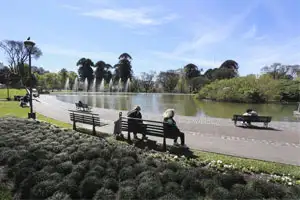 Centennial Park is one of the most famous parks in Buenos Aires and the meeting point for neighbors, visitors and families from Caballito and its surroundings. It sits in the geographic center of the city, surrounded by streets and avenues that thousands of porteños cross every day.
The park dates from the Argentine Centennial in 1910. It has a large lake and various sculptures that make up a romantic walk. Later, the city added a large amphitheater in the 1950s, where public shows take place. In addition, the park has various institutions and buildings of outstanding architecture.
Around the park, you will find the Naval Hospital, an avant-garde work by architect Clorindo Testa, a leading figure of brutalism. The building mimics a huge ship. You will also find the Association of Friends of Astronomy, a rationalist building with a radar and an observatory. Next comes the Institute of Zoonosis Luis Pasteur, in a picturesque-style building. Finally, there are several hospitals and the Bernardino Rivadavia Museum of Natural Sciences, which we cover in the next section.
Learn more in our Centennial Park guide.
Bernardino Rivadavia Museum of Natural Sciences
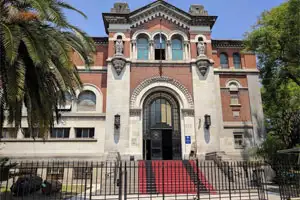 The Bernardino Rivadavia Museum of Natural Sciences is the oldest in the country, founded in 1812. For many years, it operated in several historic buildings in downtown Buenos Aires. In 1937, it moved to Centennial Park, where it got a unique building designed especially for the museum. Its façade has incredible ornaments that allude to the natural world. They include iron doors shaped like spider webs and bas-reliefs of animals and plants. With a collection of dinosaur fossils and various animal species, it is undoubtedly a good place to visit with children and as a family.
Read more about the Natural Sciences Museum in our article.
English Neighborhood (Barrio Inglés)
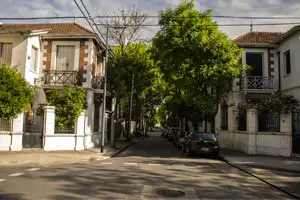 In Buenos Aires, the term “English neighborhoods” refers to different sectors where builders put up housing for workers, mostly English railway workers. In 1923, they built a series of houses in this part of Caballito, in neoclassical, Tudor and neo-Renaissance styles. Today, it is one of the most luxurious and exclusive places, with picturesque houses and quiet streets. Without a doubt, it is a beautiful place to visit.
Rivadavia Park
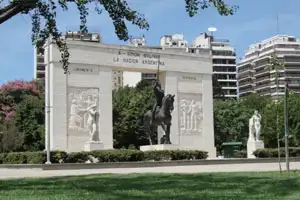 Rivadavia Park sits on Avenida Rivadavia, on the grounds of the old Quinta Lezica. It is a very popular place for residents and a pleasant spot for a walk. There, you will find the impressive Monument to Simón Bolívar and several trails with various sculptures and fountains. In addition, the park hosts the largest fair for vintage books and magazines.
Learn more in our note on Rivadavia Park.
Patio de los Lecheros
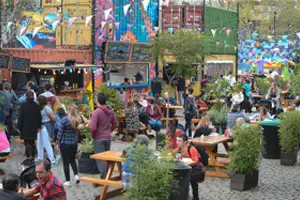 Patio de los Lecheros is the new gastronomic hub of Caballito, following the latest global trends. It sits in the characteristic railway estate that used to be the station where milk from the interior of the country arrived. Today, it is a very nice place to go for a drink, lunch or dinner.
Discover more details about Patio de los Lecheros, a huge space with options for all tastes.
Basílica Nuestra Señora de Buenos Aires
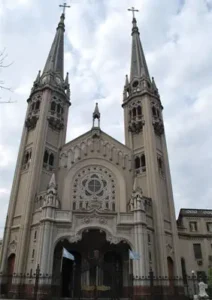 This is one of the most beautiful neo-Gothic temples in the city. The most fascinating part is its symbols and images and the story each one tells. For example, the doors pay homage to the Spaniards Solís, Mendoza and Garay, who were linked to the founding of Buenos Aires. Also worth seeing is the camarín (chamber) of the “Virgin General”, dedicated to the Virgin of Mercy, general of the Army of the North. Manuel Belgrano entrusted her with the baton of command and placed himself under her protection during the northern campaign.
Luis Perlotti Museum
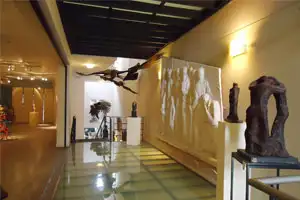 This museum focuses on sculpture and works by Argentine artists. It stands where the workshop of Argentine sculptor Luis Perlotti used to be. Upon his death, he donated the entire collection. The museum holds the Perlotti collection, with a special Americanist theme. In addition, it has two large murals by Benito Quinquela Martín and many other great national works.
Bonus: The Historic Tram
If you go to Caballito on the weekend, you will be able to take a ride on the classic Historic Tram. Check days and times on the Historic Tram website.