

What to do in San Telmo: a list with the best options to visit in this beautiful Buenos Aires neighborhood.
The San Telmo neighborhood is the second oldest in the city. Despite being the smallest of all, it concentrates much of the spirit of colonial Buenos Aires. In addition, it mixes a strong culture of diversity and immigration with unique traditions. For example, its famous Sundays Fair.
You can visit the neighborhood any day. During the week, it stays very quiet, with a little more activity closer to the weekend. However, the best day to visit it is Sunday, if you want to fully enjoy it. That’s when the traditional fair takes place.
A good plan if you are there on Sunday: join our tour of San Telmo. It lets you delve deeper into the history of the oldest part of the city. First, the tour begins in the morning in the Jesuit block in Montserrat. Then, it enters the heart of San Telmo, where you can enjoy its beautiful fair in the afternoon.
Here we are going to tell you everything about what to do in San Telmo:
San Telmo Market
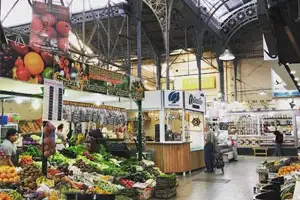 The San Telmo market is one of the few large markets still operating in the city. Similarly, markets once existed in every Buenos Aires neighborhood, back at the end of the 19th century. Architect Buschiazzo built it in 1897. Back then, it served as a large market supplying fruits, vegetables and food. In addition, the building has a wonderful iron-arched structure. Today, the market is a mixture: it still has some food stands, such as a butcher shop and a greengrocer. Besides that, antique dealers also set up stalls here, since the neighborhood began organizing the antiques fair in the 70s. More recently, the market has evolved into a rich and varied gastronomic hub. Now it offers grills, cafés, sandwich shops and all kinds of grab-and-go food and bar snacks.
San Telmo Fair and Dorrego Square
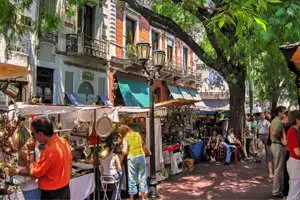 The San Telmo Fair takes place every Sunday. It originated around the famous Dorrego Square, the second oldest square in the city after Plaza de Mayo. There, picturesque colonial and classic buildings surround the square, and the towers of the San Telmo church sit in plain sight. Since 1970, antique dealers have sold artistic objects of all kinds there. Originally, architect José María Peña started the fair to rescue the neighborhood and its traditions. Also, he wanted to invite everyone to visit it on weekends.
More information about Dorrego Square here.
San Pedro González Telmo Church
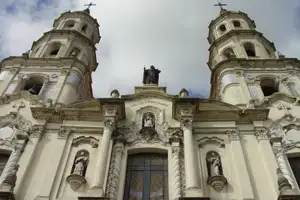 The San Telmo neighborhood takes its name from Saint Pedro González Telmo, protector of sailors. The church that bears his name sits a few meters from Plaza Dorrego. In fact, it’s one of the most beautiful in Buenos Aires. Originally, Jesuits built this colonial church. Later, in the 19th and 20th centuries, it received a Baroque-Iberian facade. Inside, there are several paintings of saints in the Buenos Aires fileteado style. Next to the church is the colonial cloister that today houses the prison museum.
Ezeiza Family House and The Defense Passage
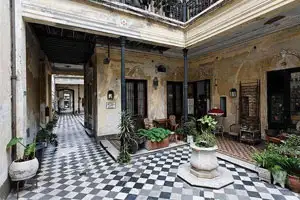 On Defense Street, reaching Avenida Independencia, there is an old house built in 1876 for the Ezeiza Family. It’s one of the last aristocratic residences built in the neighborhood during the great move of wealthy families to Recoleta. This Italian-style residence has lined courtyards, iron columns and even the old cistern, which has been preserved. Together, they create an atmosphere of old Buenos Aires. Specifically, this was before the great development of French academicism toward the north of the city. Overall, it’s undoubtedly one of the most picturesque places in San Telmo. Today, the house is a commercial gallery called The Defense Passage (Pasaje la Defensa), with clothing, handicraft and antique shops.
French Solar Gallery (Galería Solar de French)
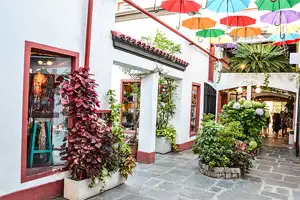 This gallery is the most Instagram-friendly place in San Telmo. It’s a commercial promenade located on the site where patriot Domingo French once lived. The house has kept its old layout of consecutive courtyards with beautiful plants and flowers. On top of that, colorful umbrellas cover the space, a trend that started in Portugal and later spread around the world. Together, they give the setting a magical touch.
So, if you don’t know what else to do in San Telmo, a good option is to walk into this beautiful house and take lots of photos.
The Narrowest House (Casa Mínima)
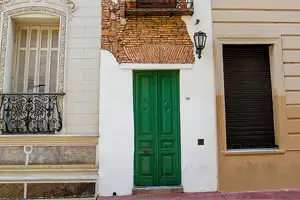 San Telmo is home to the narrowest house in Buenos Aires. It has a facade of only 2.5 meters, located on the picturesque San Lorenzo Passage. Locals popularly call it “la casa mínima.” According to legend, a freed slave once lived there. As a result, the house is said to connect to the old Buenos Aires past, when the Afro-descendant population still made up a large part of colonial Buenos Aires. However, the reality is a bit more disappointing. Architect José María Peña, who founded the San Telmo fair, was also a heritage expert. In the end, he concluded that the narrowest house is simply a subdivision of a larger old property. Even so, it continues to enchant visitors to San Telmo with its curious appearance and the legends surrounding it.
Zanjón de Granados
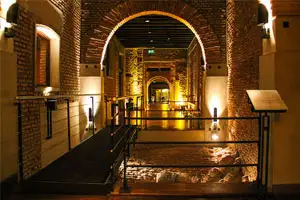 In 1985, a businessman bought an old house from 1830 for a restaurant project. By accident, he found archaeological remains of the old, channeled Tercero del Sur. Specifically, this was a stream that once crossed San Telmo and flowed into the Río de la Plata. As a result, he decided to change his plans. Instead, he dedicated himself entirely to the archaeological rescue of the ancient tunnels. Today, you can visit those tunnels. Overall, this is without a doubt the best archaeological site in Buenos Aires. In fact, it’s also the only place where you can clearly and accessibly see tunnels beneath the city. Keep in mind that the visit requires payment and a guide. For that reason, we recommend scheduling it, or saving it for a second visit to the neighborhood, or for those who live in Buenos Aires. Still, while interesting, international visitors who will only spend one day in the neighborhood can skip it.
Mafalda
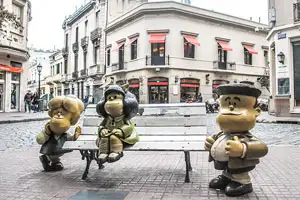 San Telmo is home to part of the “Paseo de la Historieta” (Comic Strip Walk). Specifically, it’s a series of charming statues honoring great characters from Argentine comic strips. Mostly, they date from the 60s and 70s. At the corner of Defensa and Chile stands the most famous and beloved character of all: Mafalda. According to her creator Quino, she lives in the San Telmo neighborhood. Indeed, it’s common to see tourists from all over the world lining up for a photo with this girl. After all, she touches the hearts of all Argentines.
Lezama Park and National Historical Museum
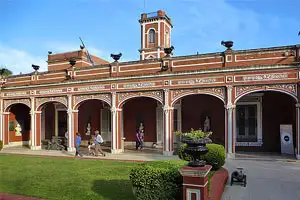 Lezama Park is a traditional park. Originally, it was the garden of José Gregorio Lezama’s house. Later, his widow donated it to the city of Buenos Aires. The park is known for its romantic design of winding paths, gazebos, statues, vessels, and an old amphitheater. There is also the monument to Pedro de Mendoza. Meanwhile, on Calle Brasil, the Russian Orthodox church dazzles with its Moscow style. On Defense Street, the old Lezama mansion still stands in a picturesque Italian style. Today, it houses the National Historical Museum, a must for anyone interested in Argentine history.
Caseros Avenue
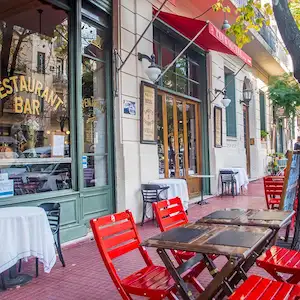 Caseros Avenue separates the San Telmo neighborhood from Barracas. There, builders raised some of the most beautiful buildings in the area. Specifically, the Southern Railway built housing for its British workers, known as the “tenement of the English.” It’s a beautiful building that transports us to a classic European boulevard. Continuing uphill, we also find several very beautiful buildings. Today, the avenue has become a gastronomic hub with an interesting offer of bars and restaurants.
We invite you to join our San Telmo Tour here!